
How to Prevent Septic System Failure: The Ultimate Homeowner Checklist for 2026
Approximately 20% of new homes built in Texas rely on an on-site septic system, yet many owners are never given a manual on how to keep them running. It’s a stressful realization, especially when you’re staring at the toilet wondering if a single “flushable” wipe is about to trigger a sewage backup. You want a home that functions reliably, not a ticking financial burden buried in your backyard. Learning how to prevent septic system failure is the best way to trade that anxiety for long-term peace of mind.
We understand the pressure of managing your own utilities, particularly with the challenging clay and rocky soil found throughout our communities. This guide provides the exact steps and daily habits you need to protect your property and the environment. We’ve compiled a clear, printable checklist for 2026 that clarifies what can go down the drain and how to manage aerobic system requirements. You’ll gain the confidence to handle routine care and learn exactly when it’s time to call in a professional, ensuring your system stays healthy for 25 years or more.
Key Takeaways
- Learn how to prevent septic system failure by adopting simple daily habits and a proactive maintenance schedule tailored for 2026.
- Discover how managing your home’s water load and fixing minor leaks can stop hydraulic overloading before it destroys your drain field.
- Understand why routine pumping and filter cleaning are the most cost-effective ways to avoid expensive emergency repairs.
- Get expert advice on protecting your system from the unique challenges of Texas “Black Gumbo” clay and heavy seasonal flooding.
- Use our printable checklist to distinguish between minor mechanical issues and serious biological failures that require professional care.
What Does Septic System Failure Actually Look Like?
Failure isn’t always a sudden, dramatic flood in your laundry room. Most often, it’s a gradual breakdown of the treatment and dispersal process. Understanding how a septic tank works is vital because it helps you spot the difference between a simple mechanical fix and a total biological collapse. If you want to prevent septic system failure, you need to recognize that your system is a living environment, not just a holding tank.
Mechanical failures usually involve the hardware, like a burnt-out aerator pump or a tripped alarm. These are urgent but often fixable. Biological failure is more serious. It occurs when the “good” bacteria that digest waste are killed off by chemicals or smothered by too much water. When this happens, solids escape the tank and clog the soil in your drain field. This doesn’t just damage your yard; it threatens local Texas groundwater. Leaking pathogens can easily migrate into neighboring wells, creating a hazard for the whole community.
Slow drains are often the first “whisper” of a coming collapse. If your sinks gurgle or the shower takes longer to empty, don’t assume it’s just a simple clog. It’s often a sign that the tank is full or the drain field is no longer absorbing water. Ignoring these early warnings is the fastest way to turn a routine maintenance task into a massive repair bill.
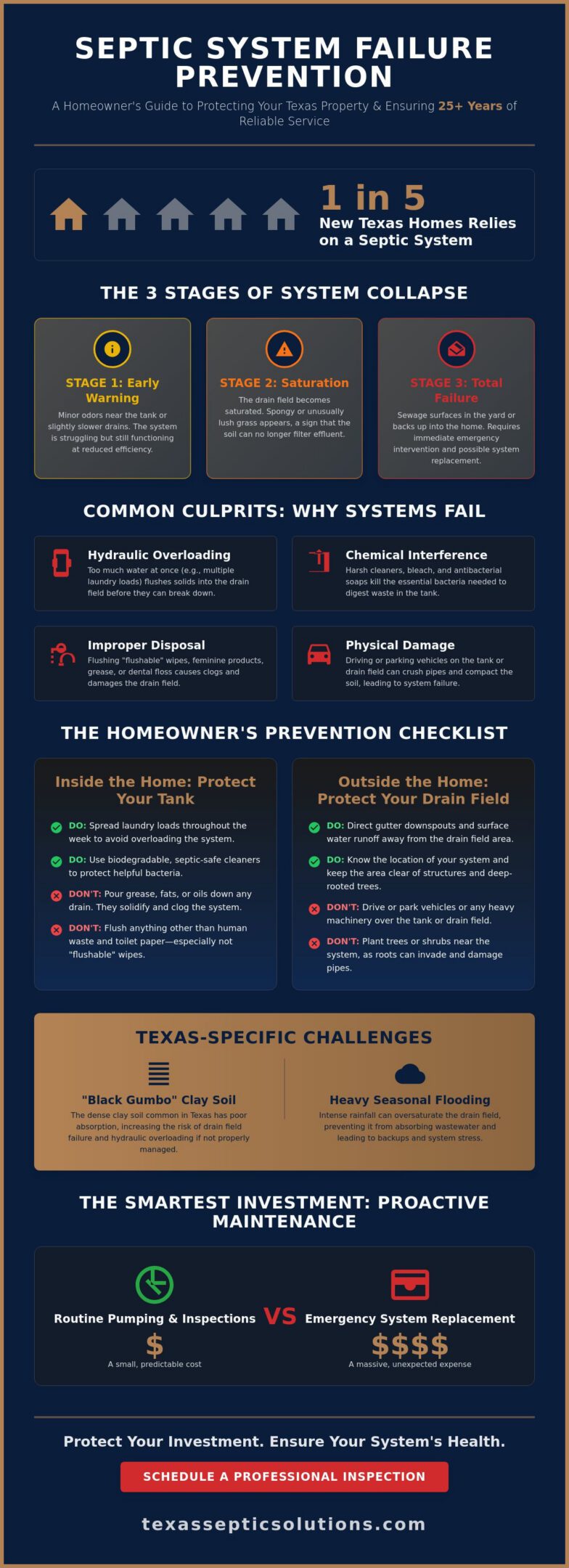
The Three Stages of System Collapse
- Stage 1: You might notice minor odors near the tank or slightly slower drains. The system is struggling, but it’s still functioning at a reduced efficiency.
- Stage 2: The drain field becomes saturated. You’ll see “spongy” or unusually lush grass over the lines, even during a dry Texas summer. This means the soil is failing to filter the effluent.
- Stage 3: This is the point of no return. Sewage surfaces in the yard or backs up into your home, requiring immediate emergency intervention and potentially a full system replacement.
Common Culprits: Why Systems Fail in Texas
Hydraulic overloading is a primary cause of failure in large households. Sending too much water down the drain at once, like doing six loads of laundry on a Saturday, flushes solids out into the drain field before they can settle. Chemical interference is another major issue. Overusing bleach, harsh drain cleaners, or antibacterial soaps kills the essential microbes that break down waste. Finally, physical damage occurs more often than you’d think. Driving a vehicle over the tank or allowing invasive tree roots to penetrate the pipes can cause immediate structural failure that stops the entire process in its tracks.
The Homeowner’s Prevention Checklist for 2026
Proactive care is always cheaper than a reactive emergency. To truly prevent septic system failure, you need a routine that covers both the biological health inside your tank and the structural integrity of your yard. Most homeowners struggle because they only think about their system when something goes wrong. By following a structured septic system maintenance checklist, you can spot minor issues before they become five-figure disasters.
Inside the Home: Protecting the Tank
Daily habits are the foundation of a healthy system. Your kitchen and bathroom choices determine how hard your bacteria have to work. Never flush items labeled as “flushable” wipes; they don’t break down and are a leading cause of clogs. The same applies to feminine products and dental floss. In the kitchen, grease is your system’s worst enemy. It solidifies in the pipes and creates a waterproof barrier in the drain field that’s nearly impossible to clear without significant expense.
Water management is equally critical. Surging the system with four loads of laundry in one afternoon can wash solids straight into your dispersal field. Instead, spread your laundry across the week to give the tank time to settle. Using biodegradable, septic-safe cleaners ensures you aren’t accidentally poisoning the microbes that keep your system functioning. If you’re concerned about the current health of your tank’s biology, a quick checkup during routine septic system maintenance can provide the answers you need.
Outside the Home: Protecting the Drain Field
The area above your system should be treated with care. Never park vehicles or drive heavy machinery over the tank or drain field. The weight can crush pipes and compact the soil, which prevents the ground from breathing and absorbing effluent correctly. Keeping this area clear is a simple but vital step to prevent septic system failure over the long term.
Manage your surface water by directing gutter downspouts and patio runoff away from the leach field. An oversaturated yard cannot process wastewater effectively. Additionally, keep an eye on your landscaping. Identify and remove deep-rooted trees or shrubs within 20 feet of the system to prevent roots from invading your lines. For professional assistance with clearing problematic growth, We Love Trees provides expert removal services that help protect your underground infrastructure. Roots are naturally drawn to the moisture in your pipes and can cause structural damage that requires a full system replacement.
Long-term Planning: The Pumping Schedule
While daily habits keep things moving, professional intervention is required for long-term health. Most systems require pumping every three to five years, depending on your household size and tank capacity. A family of five will fill a 1,000-gallon tank much faster than a couple living alone. Don’t wait for a backup to schedule this service. Regular pumping removes the sludge that bacteria cannot break down, protecting your drain field from permanent, oily clogs.
Managing Water Loads: The Key to Avoiding Overflow
Hydraulic overloading is the technical term for what happens when you ask your septic system to process more water than it was designed to handle at once. When a surge of water rushes through the tank, it doesn’t give solids enough time to settle at the bottom. Instead, those solids are pushed directly into your drain field, where they can cause permanent clogs. According to the EPA guide to preventing septic failure, managing your household water use is one of the most effective ways to ensure your system’s longevity.
Minor plumbing issues often lead to major septic headaches. A single leaky toilet flapper can waste up to 200 gallons of water a day, quietly flooding your tank while you sleep. To prevent septic system failure, you have to be vigilant about these “silent” leaks. High-efficiency appliances, such as front-loading washing machines and low-flow toilets, are excellent investments because they significantly reduce the daily volume of effluent your system must treat. This is especially vital during heavy Texas rain events. When the ground is already saturated from a Gulf storm, your drain field’s ability to absorb water is limited; adding an indoor water surge during these times is a recipe for a backup.
Smart Water Habits for Large Families
- Install low-flow fixtures: Swapping out old showerheads and adding faucet aerators can cut your indoor water use by 30% or more without sacrificing performance.
- Follow the one-appliance rule: Never run the dishwasher and the washing machine at the same time. Staggering these tasks gives your tank time to settle between uses.
- Monitor the meter: Check your water meter before and after a two-hour period when no water is being used. If the number changes, you have a hidden leak that’s taxing your septic tank.
The Danger of Water Softeners and Sump Pumps
Many homeowners don’t realize that non-sewage water can be just as damaging as wastewater. Water softener backwash can be particularly hard on a system because the salt brine can sometimes disrupt the settling process and the soil structure in your drain field. If possible, route this backwash to a separate “dry well” or drainage area. Similarly, you should never drain a hot tub or swimming pool into your septic system. In fact, it’s illegal in Texas to drain pool water into an on-site sewage facility because the sheer volume and chemical content can instantly destroy the system’s biological balance. Sump pumps and AC condensate lines should also be routed away from the septic area to prevent septic system failure caused by unnecessary saturation.
Professional Maintenance: Pumping and Inspections
Routine pumping is the single most important thing you can do to prevent septic system failure. It’s essentially a cost-effective insurance policy for your drain field. While your tank’s bacteria digest organic waste, they can’t break down everything. Over time, inorganic solids and undigested sludge build up at the bottom of the tank. If this layer gets too thick, it begins to spill over into your dispersal area, leading to a catastrophic and expensive failure that could have been avoided with a simple service call.
A professional 20-point inspection goes far deeper than just looking at the tank. We check the integrity of the inlet and outlet baffles, measure the sludge and scum layers, and test any electrical components like alarms or aerator pumps. We also look for signs of groundwater intrusion or structural cracks that might be letting treated water out or untreated water in. Don’t be fooled by “miracle” additives sold in hardware stores. Most of these chemicals are unnecessary, and some can actually harm the natural bacterial balance of your system by liquefying solids that should stay at the bottom of the tank.
Determining Your Pumping Schedule
Your schedule depends on how much waste you generate and the size of your tank. If you use a garbage disposal, you’re adding up to 50% more solid waste to your tank, which means you’ll need to pump much more frequently. Older systems, particularly in established areas like Shepherd, often have smaller tanks that require more regular attention to keep up with the demands of modern appliances and larger households. Use the table below as a general guide for a standard 2026 household.
| Household Size | 1,000 Gallon Tank | 1,500 Gallon Tank |
|---|---|---|
| 1-2 People | Every 4-5 Years | Every 6-7 Years |
| 3-4 People | Every 2-3 Years | Every 4-5 Years |
| 5-6 People | Every 1-2 Years | Every 2-3 Years |
The Importance of the Effluent Filter
Think of the effluent filter as a safety net for your yard. It’s located at the outlet pipe and catches small particles of “lint” and solids before they can reach the drain field. If you notice slow drains or hear gurgling in your pipes, a clogged filter is a likely culprit. While some homeowners try to clean these themselves, it’s a messy and potentially hazardous job. Professional cleaning ensures the filter is handled correctly without letting raw sewage bypass the system and contaminate your soil. If you’re unsure when your system was last serviced, scheduling professional septic system pumping is the best way to reset your maintenance clock and protect your investment.
Texas-Specific Septic Challenges: Soil, Rain, and Heat
Texas homeowners face a unique set of environmental hurdles that can quickly compromise even the best-designed systems. In Southeast Texas, we deal with “Black Gumbo” clay soil. This dense, heavy clay is notorious for poor drainage. When it rains, the clay expands and holds water like a sponge, making it difficult for a traditional drain field to process effluent. To prevent septic system failure in these conditions, many properties utilize aerobic systems that treat wastewater to a higher standard before dispersal. Understanding your specific soil type is the first step in managing a healthy system.
Extreme heat and high humidity also take a toll on your infrastructure. Aerobic air compressors and electrical components can overheat during 100-degree summers if they aren’t properly ventilated or maintained. Additionally, staying compliant with local regulations is essential. The Texas Commission on Environmental Quality (TCEQ) sets strict standards for on-site sewage facilities. Failing to keep up with these health codes or missing your mandatory inspections can lead to fines or system shutdowns that are far more expensive than routine care.
Surviving the Houston Rainy Season
When a heavy Gulf storm or hurricane hits, your drain field may end up completely underwater. If the soil is saturated, your system has nowhere to send treated water. During these events, you must minimize water use immediately. Avoid running the dishwasher or doing laundry until the floodwaters recede and the ground has a chance to dry out. It’s also vital to check your tank lids and risers for “inflow and infiltration.” Older, cracked lids can allow thousands of gallons of rainwater to pour into your tank. This surge can wash away the “good” bacteria and cause an immediate backup into your home.
Aerobic vs. Anaerobic Care in Texas
While traditional anaerobic systems rely on gravity and soil, newer homes in areas like Cypress often require aerobic treatment units. These systems are essentially small-scale wastewater treatment plants. They require specific attention, such as ensuring the chlorine chamber is full of septic-grade tablets to disinfect the effluent. They also rely on an air compressor to keep the oxygen-loving bacteria alive. If that compressor fails due to heat or age, the treatment process stops instantly.
If you have an aerobic system, Texas law requires you to maintain a continuous maintenance contract. This isn’t just a suggestion; it’s a regulatory requirement to ensure the system doesn’t discharge untreated waste into the environment. If your septic alarm goes off during a power outage, don’t panic. Silence the alarm and drastically reduce water use until the power returns and the pump can clear the tank. If you’re feeling overwhelmed by these regional requirements, it’s time to talk to a neighborly expert. Schedule your professional septic inspection today to ensure your system is ready for whatever the Texas weather throws its way and continue to prevent septic system failure year-round.
Secure Your Home’s Functionality for Years to Come
Your septic system is a critical investment that requires consistent attention to perform at its best. By implementing the daily habits and water management strategies we’ve discussed, you take the first step toward a worry-free home. Mastering these routines and staying ahead of professional pumping schedules is the most reliable way to prevent septic system failure and avoid the high costs of a total drain field replacement.
At Texas Septic Solutions, we take pride in being your dependable neighborly expert. We are family-owned and locally operated in Cleveland, TX, specializing in the specific needs of both aerobic and anaerobic systems. Whether you are navigating the challenges of “Black Gumbo” soil or need a 24/7 emergency response, our team is built to support you. Don’t wait for a backup to think about your tank. Prevent failure today with a Texas Septic Solutions maintenance plan. With the right care, your system will remain a sturdy, reliable part of your home for decades.
Frequently Asked Questions
How often should I pump my septic tank in Texas?
Most Texas households need pumping every 3 to 5 years. This interval depends on your household size and tank capacity. Larger families or systems in high-clay areas like the Houston area might require more frequent attention. Regular pumping is one of the most effective ways to prevent septic system failure by keeping solids from escaping into your drain field and causing permanent damage to your soil’s absorption capacity.
Can I use a garbage disposal with a septic system?
You can use a garbage disposal, but it is generally discouraged because it increases the solid waste in your tank by up to 50%. This extra load means you will need to pump your system much more frequently than a home that composts or tosses food scraps. If you must use one, ensure you are scheduling inspections every year to monitor sludge levels and prevent the outlet filter from clogging prematurely.
What are the first signs of a failing septic system?
Slow-draining sinks, gurgling pipes, and persistent sewage odors are the earliest indicators that your system is struggling. You might also notice patches of unusually green, lush grass over the drain field or soft, spongy spots in the yard even when it hasn’t rained. Addressing these symptoms immediately can often save the system before a total collapse occurs, which would require a much more expensive intervention.
Is it safe to use septic tank additives or starters?
Most industry experts and regulatory bodies recommend against using additives because a healthy system naturally produces all the bacteria it needs. Some chemicals in “miracle” cures can actually disrupt the natural breakdown process or liquefy solids that should remain at the bottom of the tank. Focus on proper waste disposal and regular maintenance instead of relying on store-bought starters that may offer no real benefit to your system’s health.
How does heavy rain affect my septic system?
Heavy rain saturates the soil in your drain field, making it impossible for the ground to absorb more wastewater. This can lead to temporary backups or even structural damage if the tank is pushed upward by groundwater pressure. During storms, it is vital to minimize indoor water use to prevent septic system failure caused by hydraulic overloading while the soil is already struggling to process the existing moisture.
What should I do if my septic alarm goes off?
Stop using water immediately and check your electrical breaker to see if a circuit has tripped. The alarm usually indicates a high water level in the tank or a pump failure, meaning you have very little storage capacity left in your system. If the alarm persists after resetting the power, you need to contact a professional for an emergency inspection to prevent an indoor backup and identify the specific mechanical issue.
Can tree roots really destroy a septic tank?
Tree roots are naturally drawn to the moisture and nutrients inside your septic pipes and can cause massive structural damage over time. They can penetrate small cracks or joints, eventually clogging the lines or even cracking the tank itself. Keeping large trees at least 20 feet away from your entire system is a necessary precaution for long-term health and prevents the need for expensive line replacements or tank repairs.
How much does it cost to fix a failed drain field?
The cost to repair or replace a failed drain field varies widely based on your soil type, the extent of the damage, and local permitting requirements. Since this is the most expensive component of your system, the best approach is to focus on prevention through regular pumping and water management. A professional assessment is required to determine the specific needs and regulatory steps for your property before any work begins.